
What to Expect at Your Lower Back PT Evaluation at Fixxed in Wakefield
If you’re dealing with lower back pain, stiffness, or recurring flare-ups, the real question isn’t just “How do we get you out of pain?” — it’s “Why is this happening in the first place?”
At Fixxed, our lower back physical therapy evaluations are designed to go deeper than symptom relief. If you’re searching for physical therapy in Wakefield for lower back pain, here’s exactly what we assess — and why it matters.
1. Posture
Posture isn’t about sitting up straight 24/7.
We evaluate how your spine, rib cage, and pelvis stack — both at rest and during movement. Chronic low back pain often isn’t caused by “bad posture,” but by lack of variability and control within your posture.
We look at:
Rib flare or rib depression
Excessive lumbar arching or flattening
Weight shift patterns
Shoulder and pelvic asymmetries
Your posture gives us clues about where you may be compensating — and where you may lack control.
2. Pelvic Positioning & Stability
Your pelvis is the bridge between your spine and your hips.
We assess:
Anterior vs. posterior pelvic tilt
Pelvic rotation or asymmetry
Single-leg stability
Load transfer during walking and standing
Poor pelvic stability often leads to excessive stress on the lumbar spine. Many patients seeking PT in Wakefield for back pain discover that the issue isn’t their back alone — it’s how their pelvis manages force.
3. Reflexes, Myotomes & Dermatomes
This is where we rule out neurological involvement.
We test:
Deep tendon reflexes
Myotomes (muscle strength tied to specific spinal nerve roots)
Dermatomes (areas of skin sensation linked to nerve roots)
If there’s numbness, tingling, radiating pain, or weakness, this part of the evaluation helps us determine whether a nerve root may be irritated or compressed.
A thorough neurological screen ensures your lower back pain is treated safely and appropriately.
4. Functional Movement Patterns
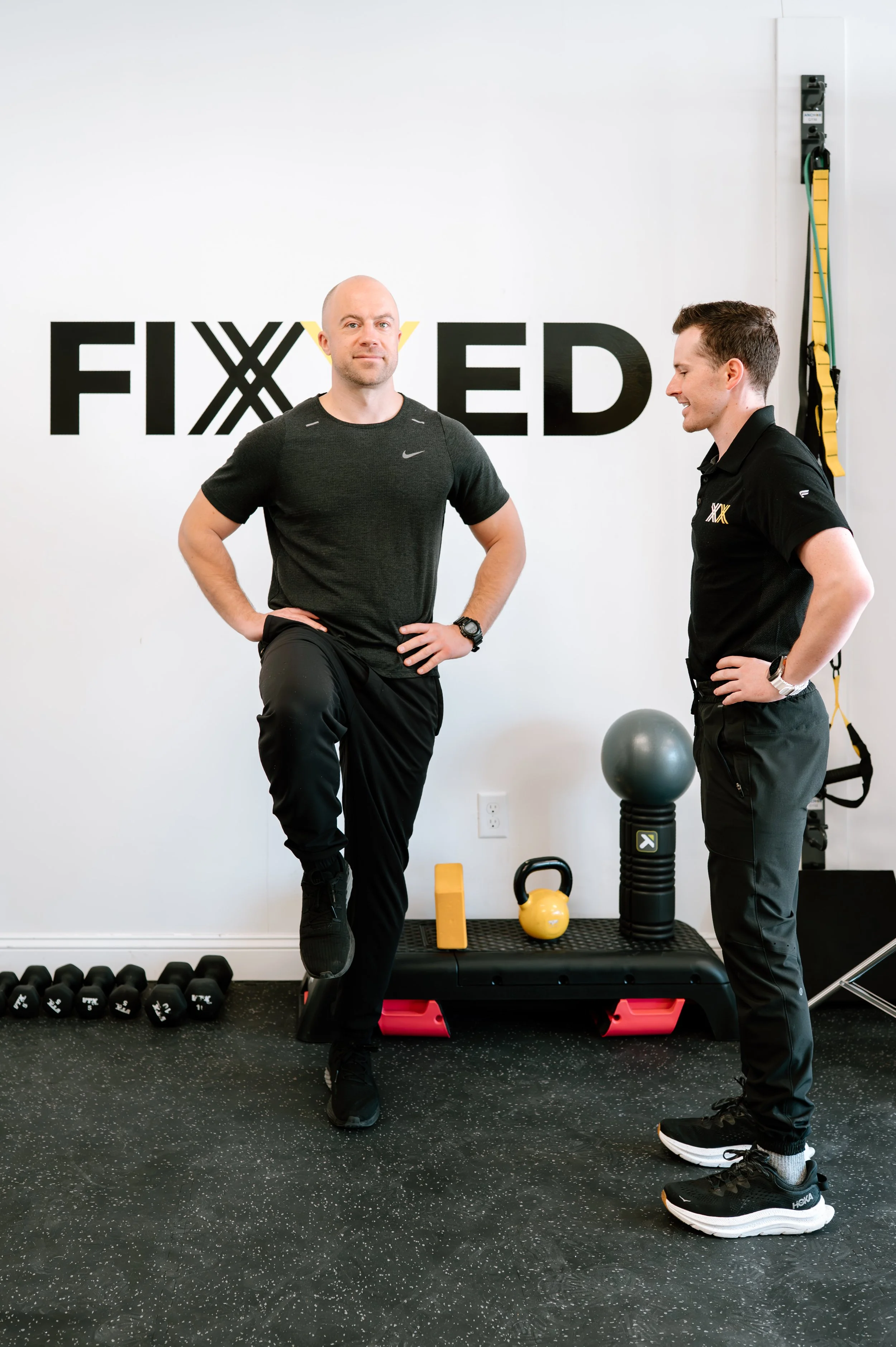
Your back doesn’t exist in isolation — it works within full-body movement.
We assess:
Squatting
Hinging
Lunging
Walking gait
Transitional movements (like getting up from a chair)
Many people overload their lumbar spine because they lack hip mobility or core control. Fixing the movement pattern often reduces back pain without directly “treating the back.”
5. Hip Strength
Weak hips = overworked lower back.
We test:
Glute max strength (hip extension)
Glute med strength (frontal plane stability)
Single-leg loading control
If your hips aren’t absorbing force efficiently, your lumbar spine picks up the slack. Improving hip strength is one of the most effective long-term strategies for reducing lower back pain.
6. Hip Mobility
Mobility limitations upstream or downstream affect the spine.
We measure:
Hip flexion and extension
Internal and external rotation
Adductor mobility
Limited hip rotation, for example, often leads to compensatory lumbar rotation — a common contributor to chronic low back irritation.
7. Core Stability & Pressure Management
Core stability is not about doing more planks.
We evaluate:
Deep abdominal activation
Oblique strength
Rib and pelvic coordination
Breathing mechanics
Intra-abdominal pressure control
Poor pressure management can contribute to back pain, pelvic floor issues, and recurring strain patterns. This is especially important for postpartum athletes and active adults in Wakefield returning to lifting or running.
8. Lumbar Spine Mobility & Positioning
Finally, we assess the lumbar spine itself.
We look at:
Segmental mobility
Flexion, extension, rotation tolerance
Directional preference
Pain response to repeated movements
Some people need more mobility. Others need more control. The key is knowing which category you fall into.
Why This Matters for Physical Therapy in Wakefield
A cookie-cutter back pain program doesn’t work.
At Fixxed, our lower back physical therapy evaluations in Wakefield are designed to identify the true driver of your pain — not just treat symptoms.
Whether you’re:
An active adult who wants to lift without flare-ups
A postpartum mom rebuilding strength
A runner dealing with recurring stiffness
Or someone tired of “temporary fixes”
We build a plan based on your movement, your goals, and your lifestyle.
Looking for Lower Back Physical Therapy in Wakefield?
If you’re searching for:
Physical therapy in Wakefield
Back pain specialist in Wakefield MA
Postpartum back pain treatment
Strength-based rehab in Wakefield
We’re here to help.
Your back pain is rarely random — and it’s almost always fixable with the right evaluation and plan.
Book your lower back PT evaluation at Fixxed in Wakefield and let’s get you moving better for the long run.