
STRENGTH vs. STABILITY
Strength vs. Stability? It’s not a contest, they both matter! How do you know whether you should focus on strength or whether you need more stability? And once you figure that out, how do you know what exercises are correct for what you need? Keep reading!
Strength is the ability to generate force or movement. If you have good force output, you have good muscle strength. Strength muscles tend to be large, like the quads and pecs, and help us move in and interact with our surroundings. Strength exercises are your basic movement patterns:
Push
Pull
Jump
Lift
Carry
Strength is important not just for the sake of strength, like going to the gym to lift as heavy as you can, but also for functional tasks. It takes strength to get up a flight of stairs and to lift heavy bags of groceries to carry into the house. Athletes need a certain amount of strength to be able to complete the movements required in their sport. When strength is lacking, performance suffers.
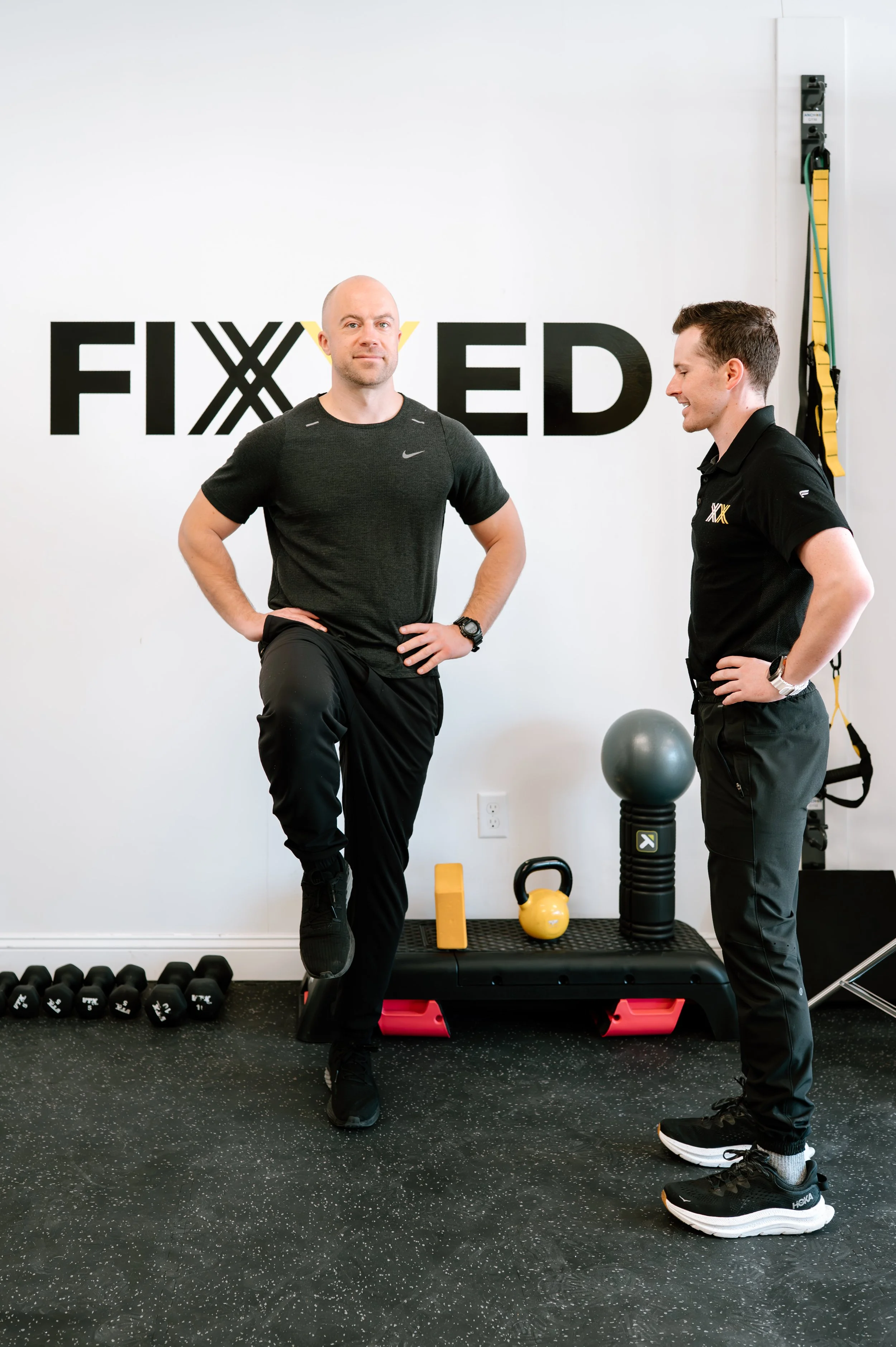
Stability is the ability to control force or resist unwanted force. If you have good control and core alignment, you have good stability. Stabilizing muscles tend to be smaller and close to the center of the body to protect the spine. Stability exercises are movements that focus on body positioning and proper joint alignment, like:
Balance drills
Single leg variations
Core exercise
Rehab and "prehab" drills
Just like with strength, stability has practical implications beyond the gym. You need stability to balance while going up stairs and keeping your torso stiff when carrying heavy loads. Lack of stability can increase your risk of injury.
Injuries happen when force is uncontrollable: heavy loads and fast or unpredictable movements. When we lack stability, an overloaded force will transfer to the weakest part of the kinetic chain. Consider a squat. You need leg strength to complete the movement, but if you lack core and pelvic stability, force gets transferred to the knees and they may cave in, leading to medial knee pain. Similarly, you need strength to perform a push-up, but if you lack scapular stability, you may place excessive strain on the bicep and experience anterior shoulder pain.
Strength and stability are both necessary components for us to move and feel our best. If we neglect strength, our movements will be controlled but we will have poor ability to generate force. If we neglect stability, we may be able to generate propulsive movement but the movement quality may be poor. When we have both together, we ensure optimal joint loading to minimize injury with maximum outputs.
While some muscles are predominately strength or stability muscles, many muscles serve both purposes and create strength and stability. For these muscles, we need to make sure we are training both characteristics for optimal health.
Unsure of what you need to level up your physical capabilities? At FIXXED, our providers are skilled at creating personalized plans that combine strength training, stability work and hands-on bodywork to help you redefine your peak potential. Schedule today! Your future self will thank you.